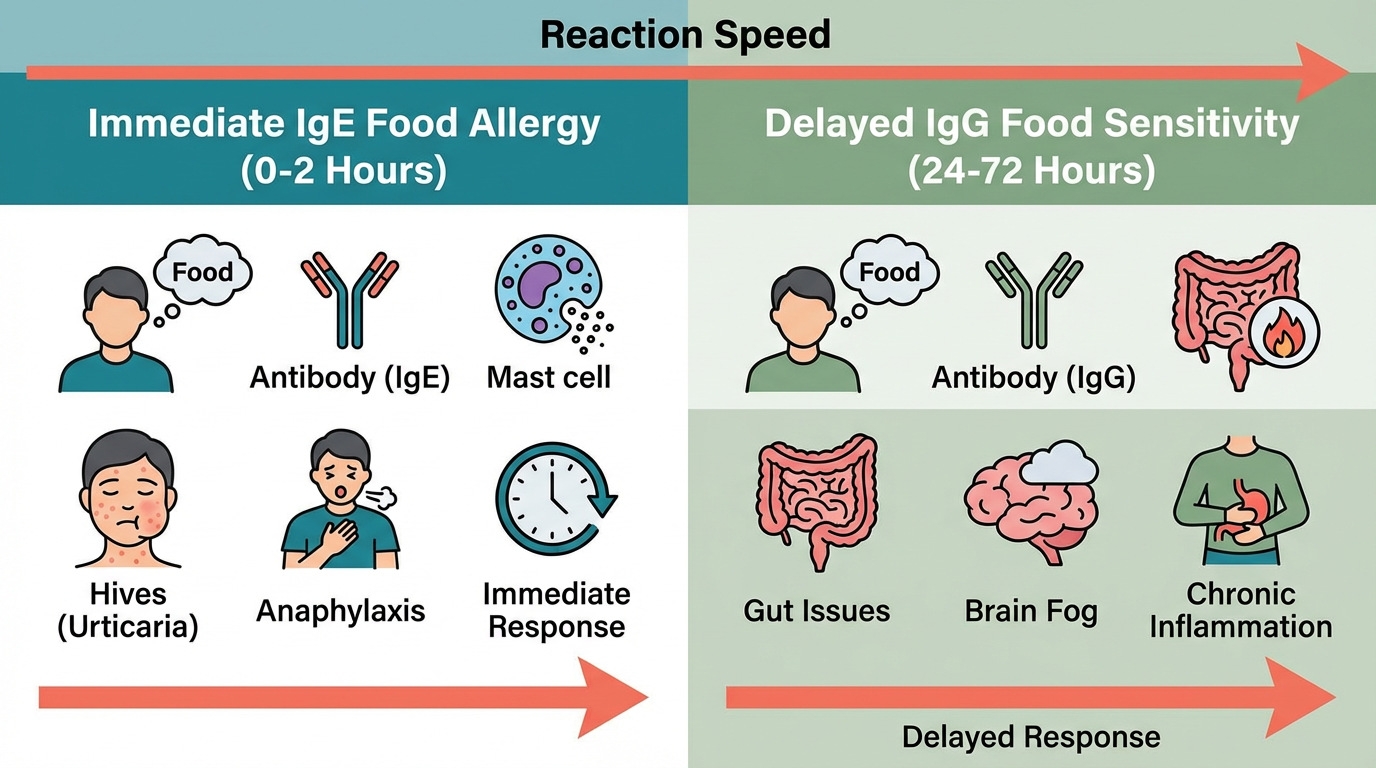
Food sensitivities aren't allergies—they're delayed inflammatory reactions causing pain, brain fog, and digestive issues. Learn how to identify hidden food sensitivities and eliminate chronic inflammation.
Full Article Content Coming Soon
This post is part of our comprehensive blog series on metabolic health optimization. The complete article content with detailed sections, actionable protocols, testing recommendations, and recovery timelines will be available shortly.
Key Topics That Will Be Covered:
- Food sensitivities vs. allergies: IgG vs. IgE reactions
- Testing methods: IgG panels and elimination diets
- Common trigger foods and symptoms
- Healing protocols: gut repair and reintroduction strategies
- Timeline for symptom resolution
The Hidden Inflammatory Trigger
Food sensitivities are different from allergies. While allergies cause immediate IgE reactions (think hives, anaphylaxis), sensitivities trigger delayed IgG immune responses—creating chronic inflammation that shows up as joint pain, brain fog, fatigue, bloating, skin issues, and mood disorders.
The problem: these reactions can occur 24-72 hours after eating, making it nearly impossible to identify trigger foods without proper testing or elimination protocols.
What This Article Will Cover
In the complete version of this article, you'll learn:
- How food sensitivities create chronic inflammation
- Testing methods: IgG panels vs. elimination diets
- The most common trigger foods and how to identify yours
- Gut healing protocols to reduce reactivity
- Timeline for symptom improvement and food reintroduction