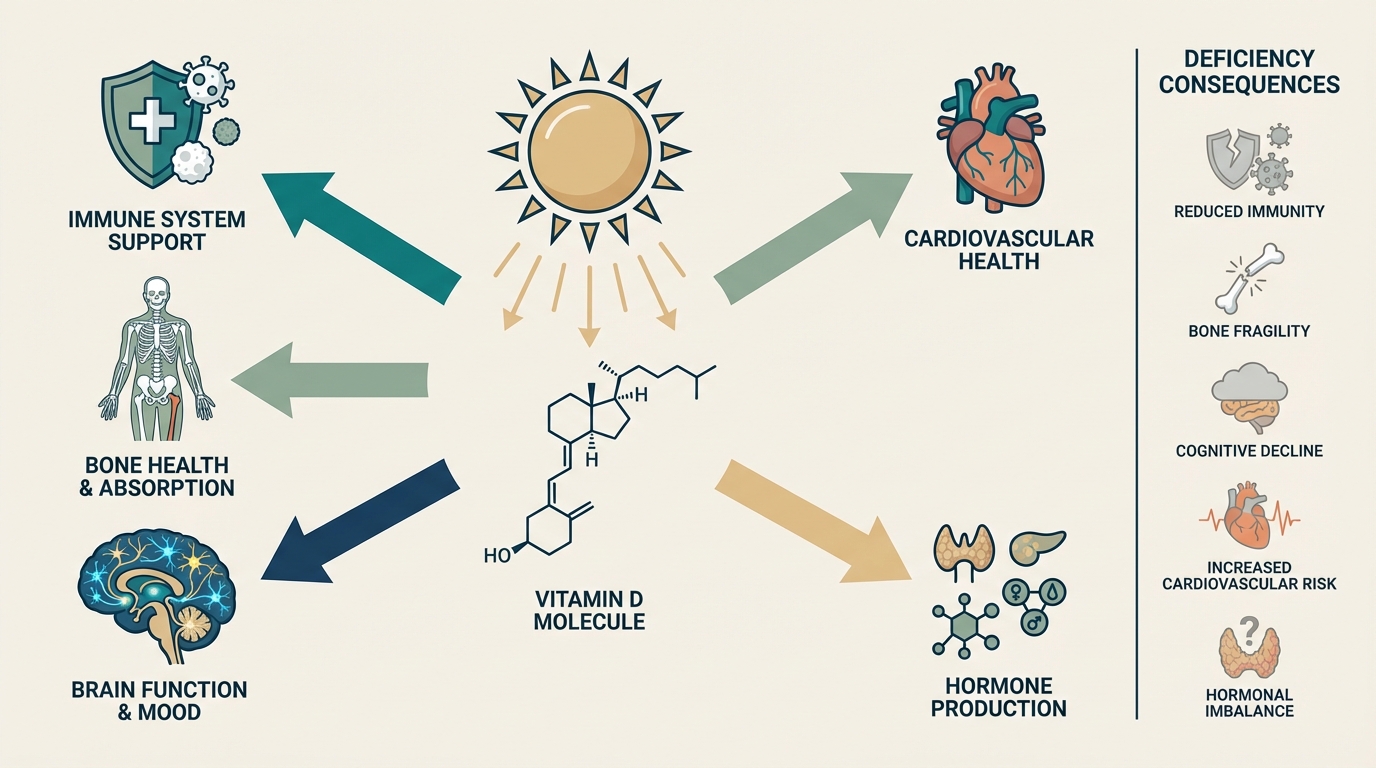
80% of people are vitamin D deficient—yet most don't know it. Learn how vitamin D affects immunity, mood, bone health, and hormones—and how to optimize your levels for better health.
Full Article Content Coming Soon
This post is part of our comprehensive blog series on metabolic health optimization. The complete article content with detailed sections, actionable protocols, testing recommendations, and recovery timelines will be available shortly.
Key Topics That Will Be Covered:
- How vitamin D regulates immune function and inflammation
- Testing vitamin D: optimal ranges (50-80 ng/mL, not 30-100)
- Vitamin D3 dosing strategies and cofactor support (K2, magnesium)
- Sun exposure guidelines for natural vitamin D production
- Timeline for symptom improvement after optimization
The Vitamin D Epidemic
Vitamin D isn't just a vitamin—it's a hormone precursor that affects nearly every system in your body. Deficiency is linked to immune dysfunction, depression, chronic pain, autoimmune disease, cardiovascular disease, and even cancer risk. Yet 80% of people have suboptimal levels.
The problem: "normal" lab ranges (30-100 ng/mL) are too broad. Optimal ranges for health and performance are 50-80 ng/mL—levels most people never achieve without supplementation.
What This Article Will Cover
In the complete version of this article, you'll learn:
- How vitamin D affects immunity, mood, bones, and hormones
- Why 80% of people are deficient despite sun exposure
- Testing and optimal ranges for vitamin D levels
- D3 supplementation protocols with cofactor support
- Timeline for symptom improvement and immune function restoration