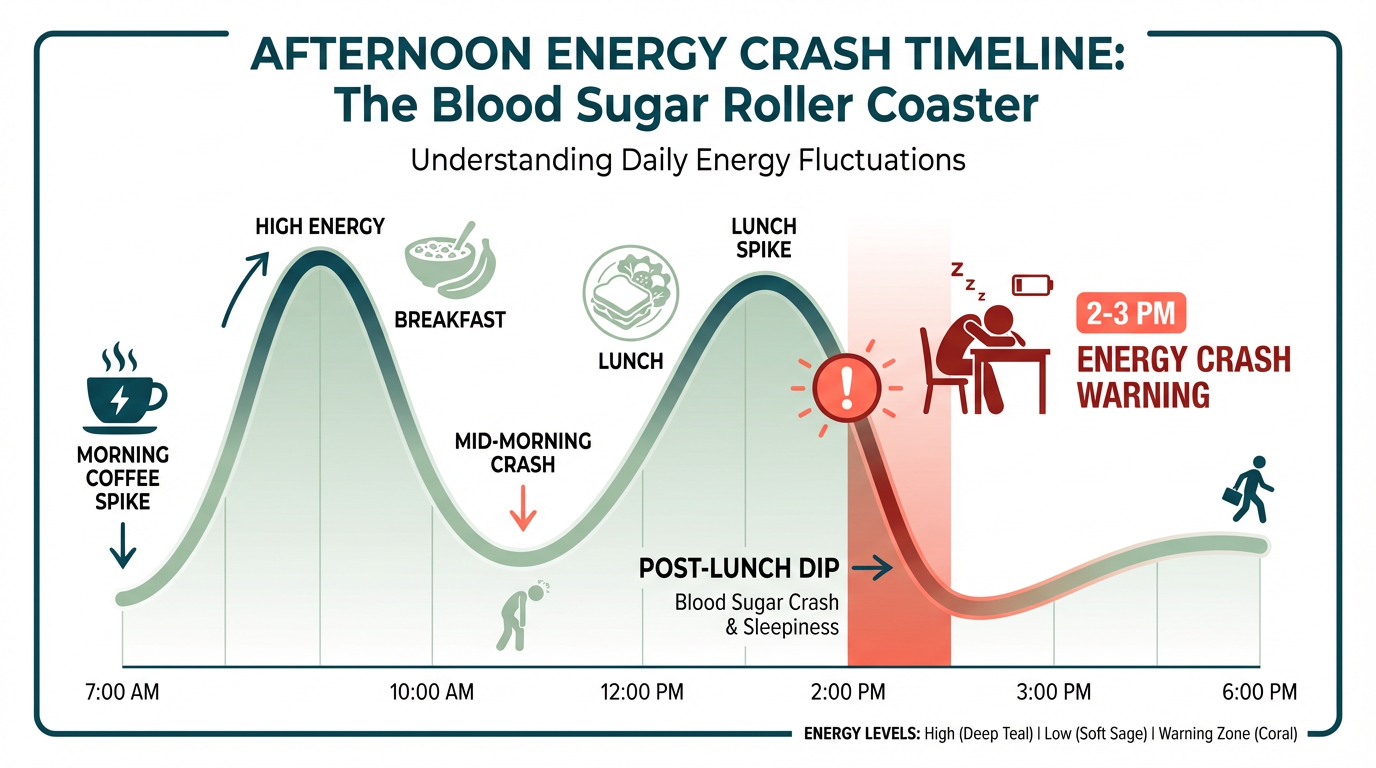
Every day, like clockwork, 2 PM hits and you crash. Your eyelids get heavy. Your brain goes foggy. You reach for coffee or sugar to push through. You assume it's normal—just part of being an adult with a demanding schedule.
But here's the truth: afternoon energy crashes are not normal. They're a sign of blood sugar dysregulation.
Key Insight: The 2 PM crash isn't about willpower or coffee dependency—it's about blood sugar and cortisol patterns that can be measured, tested, and fixed.
The 3 Types of Afternoon Crashes
Not all crashes are the same. Understanding which type you have determines how to fix it.
1. The Post-Lunch Crash (Reactive Hypoglycemia)
You eat lunch, and 1–2 hours later you crash hard. This is reactive hypoglycemia—your blood sugar spiked too high after eating, and now it's plummeting too low.
What's happening:
- You ate too many carbs (or the wrong types)
- Your pancreas overreacted and released too much insulin
- Your blood sugar drops below baseline
- You feel exhausted, shaky, irritable, craving sugar
2. The Gradual Fade (Cortisol Drop)
Your energy was decent in the morning, but by 2–3 PM you're dragging. No specific trigger—just a steady decline.
What's happening:
- Your cortisol (stress hormone) is low in the afternoon
- You're running on fumes by midday
- Your body can't sustain energy without cortisol support
3. The All-Day Exhaustion (Chronic Metabolic Dysfunction)
You're tired all day, but afternoons are the worst. Coffee barely helps. You need willpower just to function.
What's happening:
- Insulin resistance
- Mitochondrial dysfunction (your cells can't produce energy efficiently)
- Thyroid suppression
- Chronic inflammation
Warning Sign: If you're experiencing all-day exhaustion with severe afternoon crashes, this may indicate insulin resistance or metabolic dysfunction requiring comprehensive testing.
What Causes the 2 PM Crash?
1. Your Lunch Composition
Most people's lunches are carb-heavy and protein-poor:
- Sandwich or wrap (refined carbs)
- Chips or fries (more carbs)
- Minimal protein or fat
This spikes your blood sugar, triggers an insulin surge, and causes a crash 1–2 hours later.
2. Insulin Resistance
If you're insulin resistant, your cells don't respond well to insulin. Your pancreas has to produce more and more insulin to get glucose into cells. Eventually, you overshoot—and crash.
3. Skipping Breakfast or Eating a Poor Breakfast
If you skip breakfast or eat only carbs (bagel, cereal, pastry), your blood sugar starts the day unstable. By afternoon, it's chaotic.
4. Cortisol Dysregulation
Cortisol should be high in the morning and gradually decline through the day. If your cortisol drops too low by afternoon (adrenal dysfunction), you lose energy support.
5. Poor Sleep
One night of poor sleep reduces insulin sensitivity by 30%. Chronic sleep deprivation creates chronic afternoon crashes.
The Blood Sugar Rollercoaster
High-carb meal → Blood sugar spike → Insulin surge → Blood sugar crash → Cravings for sugar/caffeine → Repeat
Breaking this cycle requires strategic nutrition, not just willpower.
How to Test Your Blood Sugar Patterns
1. Fasting Glucose and Fasting Insulin
Basic but critical:
- Fasting glucose: Optimal <85 mg/dL
- Fasting insulin: Optimal <5 µIU/mL (anything above 8–10 signals insulin resistance)
2. HbA1c
Shows average blood sugar over 3 months:
- Optimal: <5.3%
- Prediabetes: 5.7–6.4%
3. Continuous Glucose Monitor (CGM)
The gold standard. Wear a sensor for 10–14 days and see your glucose in real-time:
- How high does it spike after lunch?
- How long does it take to return to baseline?
- Are you crashing below baseline (reactive hypo)?
CGM Benefits: See exactly which foods spike you, how exercise affects you, and when your crashes occur. This is personalized data that transforms guesswork into precision.
How to Fix the 2 PM Crash
1. Optimize Your Lunch Composition
The formula:
- Protein first: 30–40g (palm-sized portion of meat, fish, eggs)
- Healthy fats: Avocado, olive oil, nuts
- Non-starchy vegetables: Greens, broccoli, cauliflower
- Minimal carbs: If you include carbs, eat them last and keep them low-glycemic
Example lunch: Grilled chicken salad with avocado, olive oil, mixed greens, and a small side of quinoa (optional)
2. Strategic Protein Timing
- Breakfast: 30–40g protein (sets blood sugar stability for the day)
- Lunch: 30–40g protein (prevents afternoon crash)
- Snack (if needed): Protein + fat (e.g., Greek yogurt, hard-boiled eggs, nuts)
3. Pre-Meal Movement
A 10-minute walk before lunch primes your muscles to absorb glucose, reducing the post-meal spike by 20–30%.
4. Avoid Hidden Sugars
Check labels for:
- Salad dressings (loaded with sugar)
- Sauces and condiments
- "Healthy" protein bars (often 20g+ sugar)
- Smoothies and juices
5. Support with Targeted Supplements
- Chromium: 200–400 mcg daily (improves insulin sensitivity)
- Berberine: 500 mg 3× daily with meals (as effective as metformin)
- Alpha-lipoic acid: 300–600 mg daily (improves glucose uptake)
- Cinnamon extract: 500 mg daily (helps regulate blood sugar)
6. Fix Your Sleep
Sleep deprivation = insulin resistance = afternoon crashes. Non-negotiable.
- 7–9 hours per night
- Consistent sleep/wake times
- Cool, dark room (65–68°F)
- No screens 1–2 hours before bed
Recovery Timeline
What to Expect
- 1 week: Notice more stable energy if you fix lunch composition
- 2–4 weeks: Afternoon crashes significantly reduced
- 6–8 weeks: Blood sugar patterns normalize (if insulin resistance is addressed)
The Bottom Line
The 2 PM crash isn't about willpower. It's not about needing more coffee. It's about blood sugar dysregulation—and it's fixable.
Test your patterns, optimize your nutrition, and watch your energy stabilize.
Medical Disclaimer: This article is for educational purposes only and not a substitute for professional medical advice. Consult a qualified healthcare provider before starting any supplement or treatment protocol.
Ready to Fix Your Afternoon Energy Crashes?
Let's test your blood sugar patterns and build a personalized nutrition protocol to restore stable energy all day.
Book a free 15-minute discovery call. We'll discuss whether functional testing is the right next step for you—no pressure, just information.
Book Your Free Discovery CallNo sales pitch. Just an honest conversation about your health.