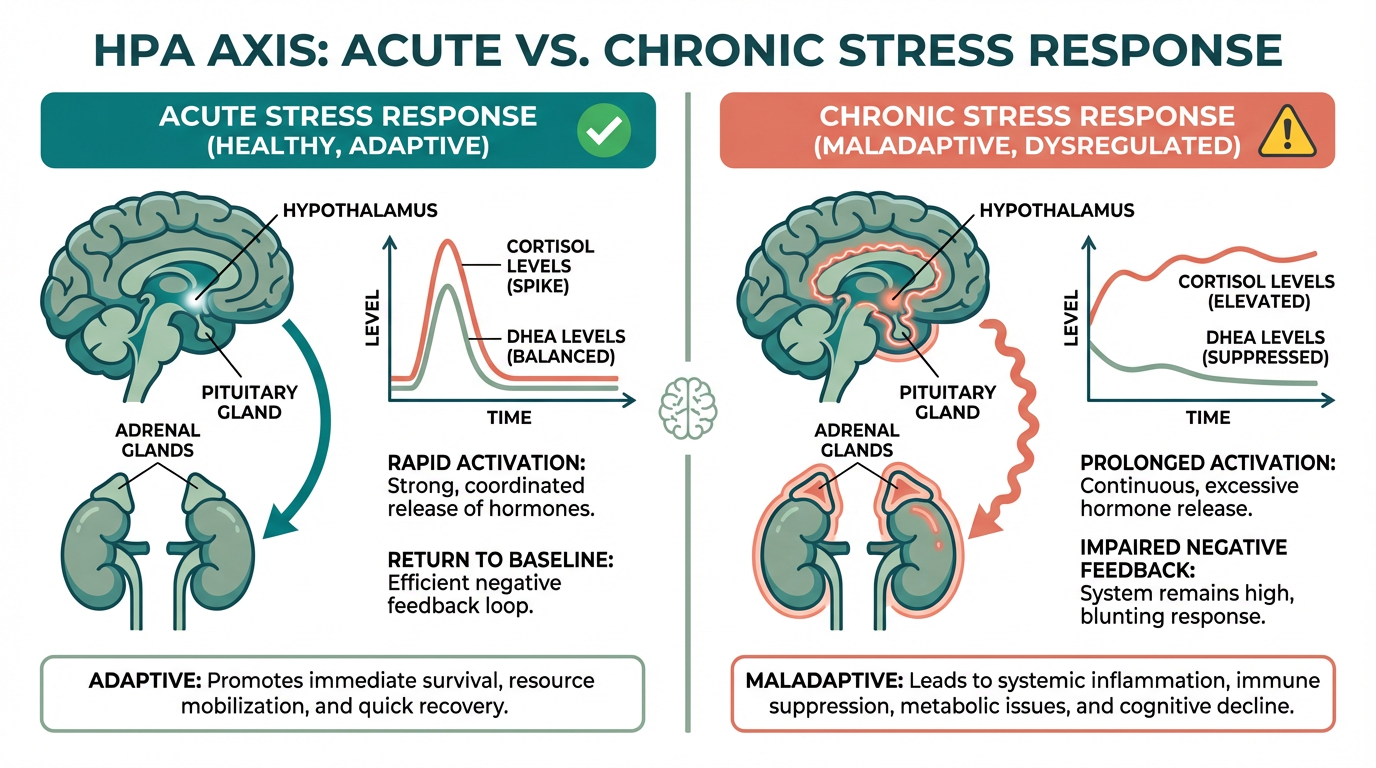
Chronic stress physically changes your brain structure—damaging the hippocampus, prefrontal cortex, and amygdala. Learn how stress rewires your brain and evidence-based strategies to reverse the damage through neuroplasticity.
Full Article Content Coming Soon
This post is part of our comprehensive blog series on metabolic health optimization. The complete article content with detailed sections, actionable protocols, testing recommendations, and recovery timelines will be available shortly.
Key Topics That Will Be Covered:
- How chronic stress shrinks the hippocampus and prefrontal cortex
- The amygdala hijack: why stress makes you reactive
- Testing cortisol patterns and brain-derived neurotrophic factor (BDNF)
- Neuroplasticity protocols: meditation, exercise, and cognitive training
- Timeline for brain recovery and structural restoration
Your Brain Under Chronic Stress
Chronic stress doesn't just make you feel overwhelmed—it physically changes your brain structure. Elevated cortisol shrinks the hippocampus (memory center), weakens the prefrontal cortex (executive function), and enlarges the amygdala (fear response). These changes affect memory, decision-making, emotional regulation, and cognitive performance.
The good news: your brain is plastic. Through targeted interventions—including stress reduction, exercise, cognitive training, and proper nutrition—you can reverse stress-induced brain damage and restore optimal cognitive function.
What This Article Will Cover
In the complete version of this article, you'll learn:
- The neuroscience of stress-induced brain changes
- How to test cortisol patterns and brain health markers
- Evidence-based neuroplasticity protocols for brain recovery
- Nutrition and supplement strategies to support brain health
- Timeline for cognitive improvement and structural restoration