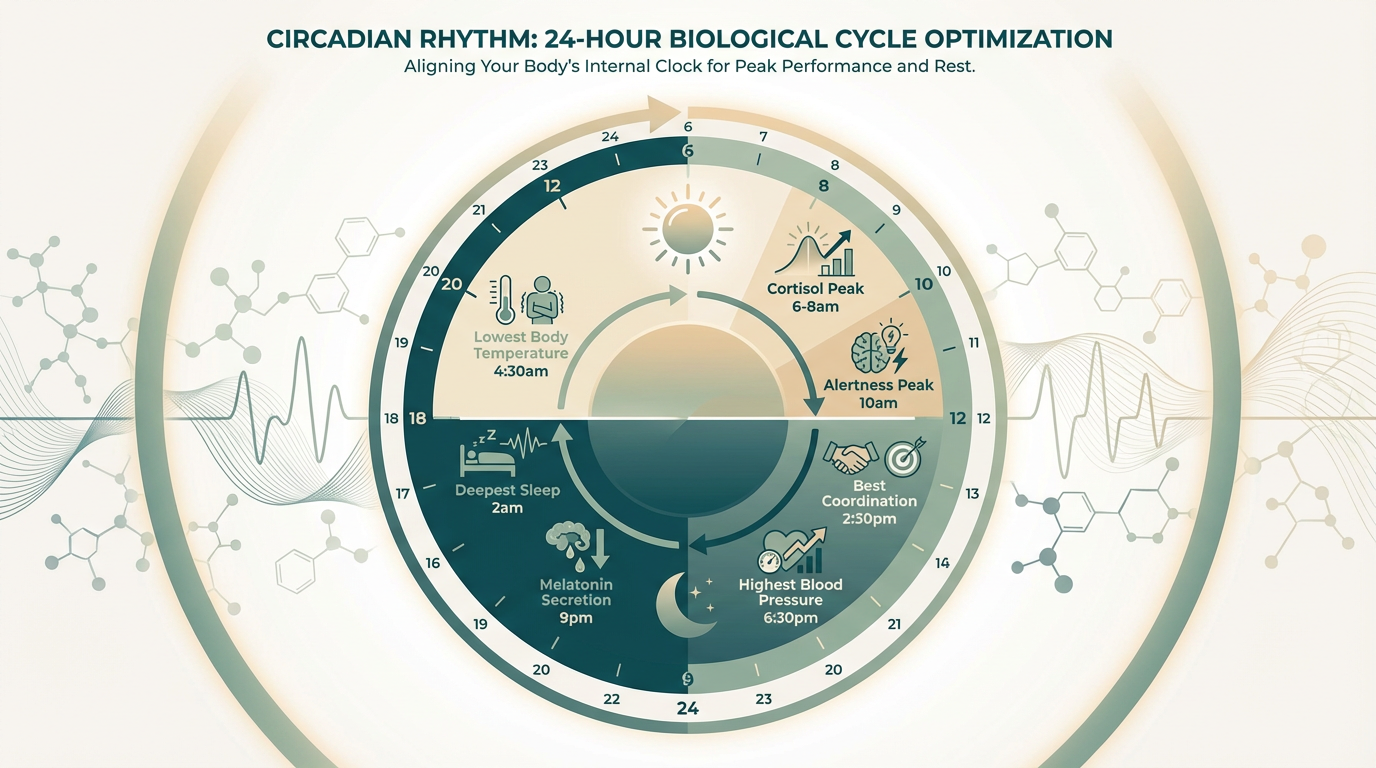
Your circadian rhythm controls sleep, hormones, metabolism, and immune function. Learn how to optimize your biological clock for peak performance—and why modern life disrupts it.
Full Article Content Coming Soon
This post is part of our comprehensive blog series on metabolic health optimization. The complete article content with detailed sections, actionable protocols, testing recommendations, and recovery timelines will be available shortly.
Key Topics That Will Be Covered:
- How light exposure controls your biological clock
- The melatonin-cortisol relationship and sleep quality
- Meal timing strategies for metabolic optimization
- Testing circadian rhythm with DUTCH testing
- Recovery protocols for shift workers and travelers
Understanding Your Biological Clock
Your circadian rhythm isn't just about sleep—it's the master controller of virtually every biological process in your body. When your circadian rhythm is optimized, everything from hormone production to immune function operates at peak efficiency. When it's disrupted, metabolic dysfunction follows.
Modern life systematically destroys circadian rhythms through artificial light at night, irregular meal timing, shift work, travel across time zones, and constant screen exposure. The result: disrupted sleep, hormone imbalances, weight gain, mood disorders, and increased disease risk.
What This Article Will Cover
In the complete version of this article, you'll learn:
- How light, meal timing, and temperature regulate your biological clock
- The cascade of hormones controlled by circadian rhythms
- Functional tests that reveal circadian dysfunction
- Evidence-based strategies to reset and optimize your rhythm
- Timeline for circadian restoration and expected benefits