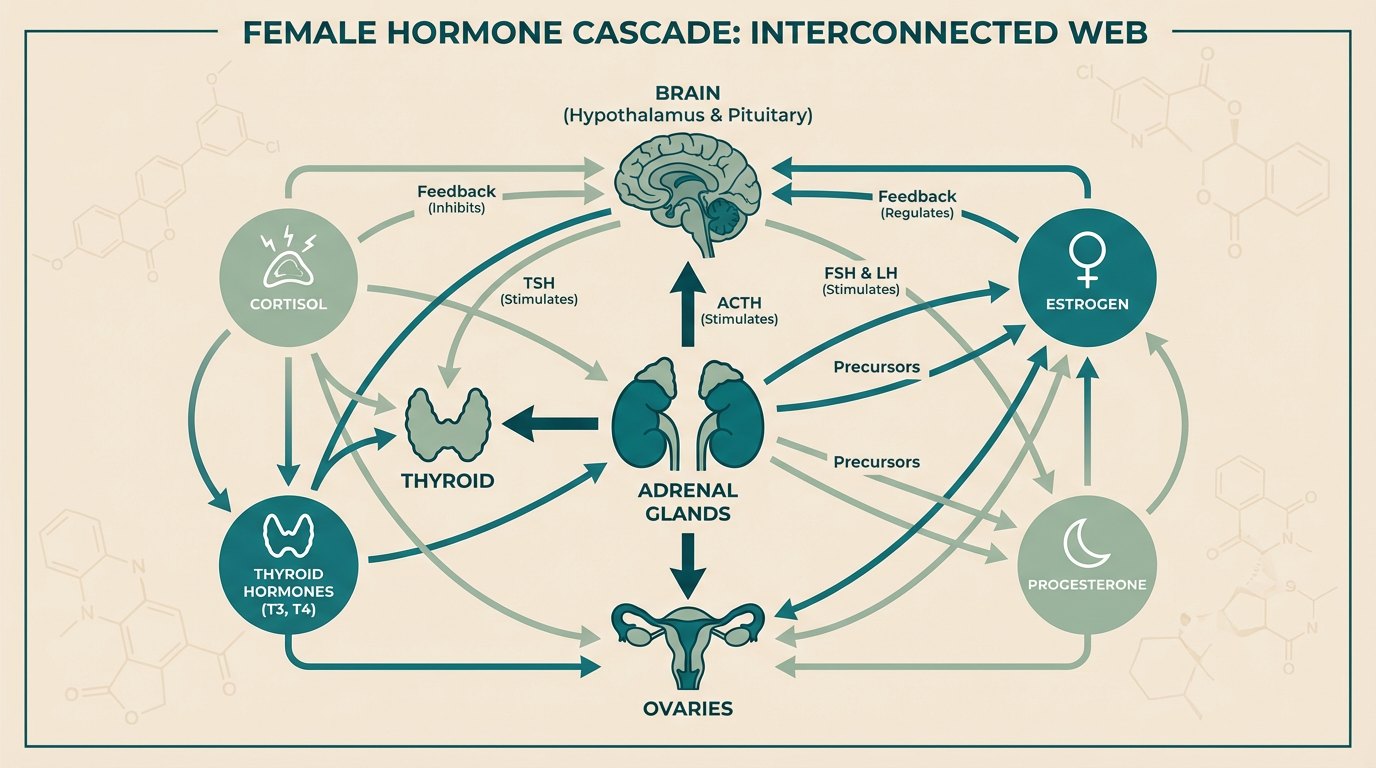
Women's hormones form an interconnected network where one imbalance triggers cascading effects. Learn how estrogen, progesterone, cortisol, thyroid, and insulin interact—and how to test and restore balance.
Full Article Content Coming Soon
This post is part of our comprehensive blog series on metabolic health optimization. The complete article content with detailed sections, actionable protocols, testing recommendations, and recovery timelines will be available shortly.
Key Topics That Will Be Covered:
- The hormone hierarchy: how stress, thyroid, and sex hormones interact
- Comprehensive hormone testing: DUTCH, full thyroid, metabolic panels
- Common patterns: estrogen dominance, low progesterone, PCOS
- Nutrition and lifestyle strategies for hormone balance
- Timeline for hormone restoration
The Hormone Network
Women's hormones don't operate in isolation—they're an interconnected network. When cortisol is elevated from stress, progesterone drops. When insulin is dysregulated, testosterone increases (PCOS). When thyroid is low, estrogen metabolism slows. One imbalance creates a domino effect.
Restoring balance requires testing the entire network and addressing root causes—not just symptom management with birth control.
What This Article Will Cover
In the complete version of this article, you'll learn:
- How women's hormones form an interconnected network
- The most common hormone imbalance patterns
- Comprehensive testing to identify your pattern
- Evidence-based protocols for hormone restoration
- Timeline for symptom improvement and cycle regulation