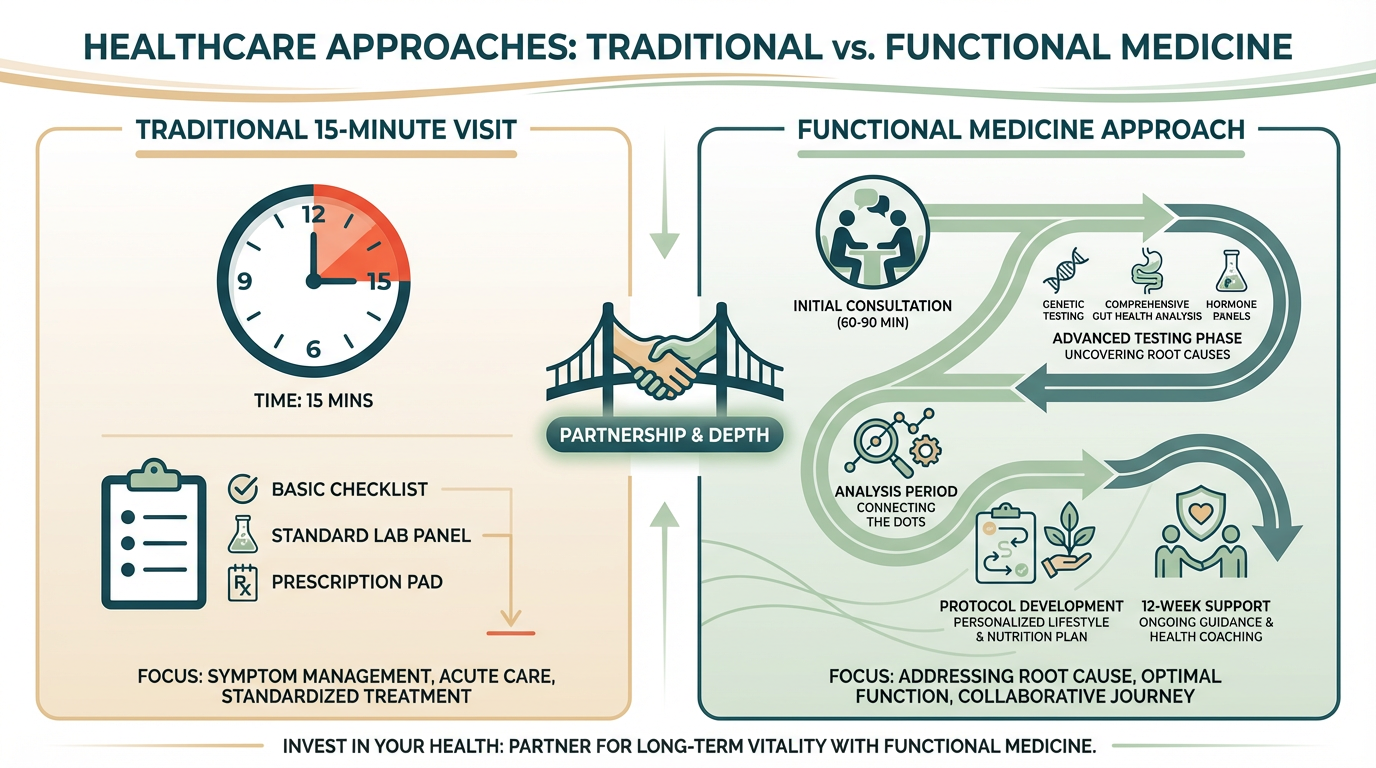
Conventional and functional medicine approach health differently. Learn which model fits your health goals, when to use each, and why the approach matters more than the diagnosis.
Full Article Content Coming Soon
This post is part of our comprehensive blog series on metabolic health optimization. The complete article content with detailed sections, actionable protocols, testing recommendations, and recovery timelines will be available shortly.
Key Topics That Will Be Covered:
- The fundamental differences between conventional and functional medicine
- Testing approaches: standard labs vs. comprehensive functional panels
- Disease management vs. root cause resolution
- When to use each approach for optimal health outcomes
- Case examples demonstrating functional medicine success
Two Different Paradigms
Conventional medicine excels at acute care—infections, injuries, emergencies. But for chronic conditions driven by lifestyle and metabolic dysfunction, a different approach is needed. Functional medicine focuses on identifying and addressing root causes rather than managing symptoms.
Understanding when to use each approach—and how they complement each other—empowers you to make informed decisions about your health optimization journey.
What This Article Will Cover
In the complete version of this article, you'll learn:
- Core principles of conventional vs. functional medicine
- Testing strategies: standard labs vs. advanced functional panels
- Treatment approaches: symptom management vs. root cause resolution
- When each approach is most appropriate
- How to integrate both models for optimal health