You're tired all the time. Your libido is gone. Building muscle feels impossible. Brain fog is constant. You're more irritable than you used to be. Belly fat keeps accumulating no matter what you do.
Your doctor checks your testosterone. It comes back at 350 ng/dL. They say it's "within normal range" and send you home.
Here's the truth: "normal" doesn't mean optimal—and 350 ng/dL is functionally low, even if it's technically in range.
What Is Testosterone and Why Does It Matter?
Testosterone is the primary male sex hormone. It's produced mainly in the testes (95%) and partly by the adrenal glands (5%). Testosterone is responsible for:
- Libido and sexual function
- Muscle mass and strength
- Bone density
- Fat distribution (prevents belly fat accumulation)
- Red blood cell production
- Mood, motivation, and mental clarity
- Energy and vitality
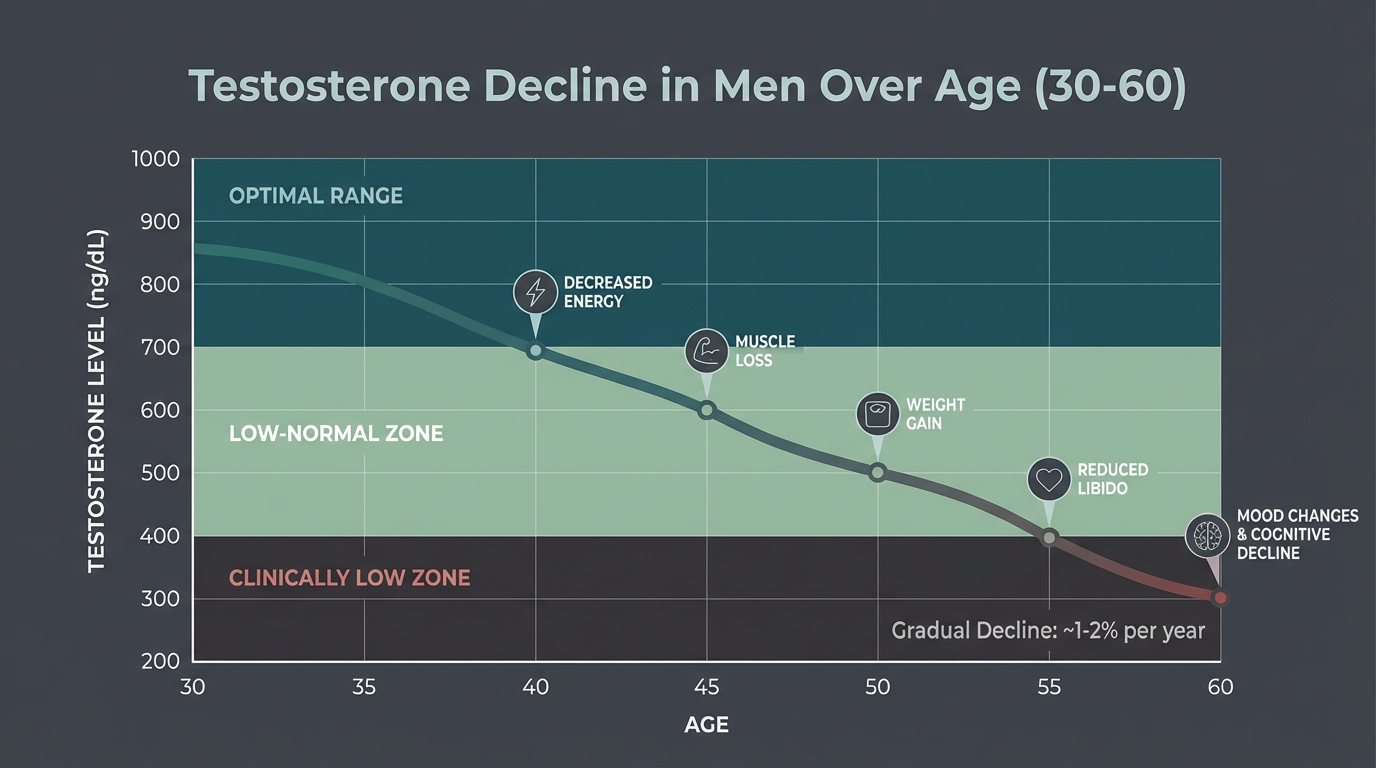
Testosterone naturally declines with age—about 1–2% per year after age 30. But many men experience drops far steeper and earlier than expected due to lifestyle, stress, and metabolic dysfunction.
The Modern Testosterone Crisis
Average testosterone levels in men have dropped 20–30% over the past 30 years. A 30-year-old man today has the testosterone of a 50-year-old man from the 1980s.
This isn't just aging—it's environmental toxins, chronic stress, poor diet, sleep deprivation, and metabolic dysfunction.
Symptoms of Low Testosterone
Low testosterone doesn't show up as one clear symptom—it's a constellation of issues:
Physical Symptoms:
- Low libido or erectile dysfunction
- Difficulty building or maintaining muscle
- Increased body fat (especially belly fat)
- Fatigue and low energy
- Reduced strength and endurance
- Loss of body hair
- Gynecomastia (breast tissue development)
- Hot flashes or night sweats
Mental/Emotional Symptoms:
- Brain fog and poor concentration
- Low motivation and drive
- Depression or mood swings
- Irritability
- Lack of confidence
Metabolic Symptoms:
- Insulin resistance
- Elevated blood sugar
- High cholesterol
- Increased visceral fat
If you recognize multiple symptoms from this list, testing is critical.
How to Test Testosterone Properly
Most doctors order a single total testosterone test. If you're above the bottom of the range, they say you're fine. This approach misses the nuance.
What to Test:
1. Total Testosterone
Measures all testosterone in your blood (bound + unbound).
| Total Testosterone Level | Status |
|---|---|
| 600–900 ng/dL | Optimal range |
| 300–500 ng/dL | Functionally low (symptoms present) |
| <300 ng/dL | Clinical hypogonadism |
| 300–1,000 ng/dL | Normal range (too broad) |
2. Free Testosterone
Only 2–3% of testosterone is "free" (unbound and biologically active). This is the testosterone your body can actually use.
| Free Testosterone | Status |
|---|---|
| >15–20 ng/dL | Optimal |
| 9–30 ng/dL | Normal range |
3. SHBG (Sex Hormone-Binding Globulin)
SHBG binds testosterone and makes it unavailable. High SHBG = low free testosterone even if total testosterone looks normal.
4. Estradiol (E2)
Men need some estrogen—but too much causes problems:
- Gynecomastia (man boobs)
- Water retention
- Mood swings
- Fat gain
Optimal estradiol in men: 20–30 pg/mL
5. LH and FSH
These pituitary hormones signal the testes to produce testosterone.
- Low LH/FSH + low testosterone = secondary hypogonadism (brain/pituitary issue)
- High LH/FSH + low testosterone = primary hypogonadism (testicular issue)
6. Additional Tests:
- Prolactin - Elevated prolactin suppresses testosterone and libido
- Thyroid Panel - Low thyroid mimics low T symptoms
- Fasting Insulin & Glucose - Insulin resistance lowers testosterone
When to Test
Testosterone is highest in the morning (7–9 AM). Always test in the morning, fasting, for accurate results.
What Causes Low Testosterone?
1. Obesity and Insulin Resistance
Fat tissue contains aromatase, an enzyme that converts testosterone to estrogen. The more body fat you have, the more testosterone you lose. Insulin resistance also directly suppresses testosterone production.
2. Chronic Stress
High cortisol suppresses the HPG axis (hypothalamus-pituitary-gonadal axis), which controls testosterone production. Chronic stress = chronic low testosterone.
3. Poor Sleep
Testosterone is produced during deep sleep. Sleep deprivation can lower testosterone by 10–15% after just one week.
4. Environmental Toxins
Endocrine disruptors mimic or block hormones:
- BPA (plastics)
- Phthalates (personal care products, plastics)
- Pesticides and herbicides
- Heavy metals
5. Nutrient Deficiencies
- Zinc - Critical for testosterone production
- Vitamin D - Acts as a steroid hormone; deficiency lowers testosterone
- Magnesium - Increases free testosterone
6. Other Causes:
- Chronic alcohol consumption
- Certain medications (opioids, statins, SSRIs)
- Testicular injury or dysfunction
- Natural aging (1-2% decline per year after 30)
How to Optimize Testosterone Naturally
Before considering TRT, try these evidence-based strategies:
1. Lose Body Fat (Especially Visceral Fat)
Every 10% reduction in body fat can increase testosterone by 50–100 ng/dL.
2. Resistance Training
Heavy compound lifts (squats, deadlifts, presses) boost testosterone acutely and chronically.
- Lift 3–5× per week
- Focus on progressive overload
- Don't overtrain (excessive volume lowers testosterone)
3. Sleep 7–9 Hours
Prioritize deep sleep. Testosterone is produced during REM and deep sleep stages.
4. Reduce Stress and Cortisol
- Daily stress practices (breathwork, meditation, nature time)
- Adaptogenic herbs (ashwagandha, rhodiola)
- Reduce overtraining
5. Eat for Testosterone Production
- Healthy fats - Testosterone is made from cholesterol. Eat eggs, grass-fed meat, avocado, olive oil
- Protein - 1g per pound of body weight to support muscle and hormones
- Avoid processed foods, seed oils, excess sugar
6. Strategic Supplementation
- Zinc - 30–50 mg daily (if deficient)
- Magnesium - 400–600 mg daily
- Vitamin D - Optimize to 50–80 ng/mL
- Boron - 6–10 mg daily (increases free testosterone)
- Ashwagandha - 600 mg daily (lowers cortisol, raises testosterone)
- Tongkat Ali - 200–400 mg daily (supports LH and testosterone)
7. Reduce Estrogenic Exposure
- Avoid plastics (use glass or stainless steel)
- Choose organic produce (reduce pesticide exposure)
- Use non-toxic personal care products
- Filter your water
When to Consider Testosterone Replacement Therapy (TRT)
If lifestyle interventions don't work—or if your testosterone is clinically low (<300 ng/dL)—TRT may be appropriate.
Benefits of TRT:
- Increased energy and vitality
- Improved libido and sexual function
- Increased muscle mass and strength
- Fat loss (especially visceral fat)
- Better mood and mental clarity
- Improved insulin sensitivity
Types of TRT:
- Injections (testosterone cypionate or enanthate) - Most common, cost-effective
- Topical gels or creams - Convenient but variable absorption
- Pellets - Inserted under the skin, last 3–6 months
- Patches - Daily application
Important: TRT is a Lifelong Commitment
Once you start TRT, your body stops producing its own testosterone. You'll need regular monitoring of:
- Total and free testosterone (target 600–900 ng/dL)
- Estradiol (keep in optimal range)
- Hematocrit (red blood cell count)
- PSA (prostate health)
- Lipids and liver function
TRT Risks:
- Testicular atrophy (testes shrink)
- Infertility (suppresses sperm production)
- Elevated estrogen (if not managed)
- Increased red blood cell count
- Acne or oily skin
Testosterone Optimization Timeline
Natural Optimization:
2–4 weeks: Sleep, energy improve
6–8 weeks: Strength, libido increase
3–6 months: Body composition shifts, full symptom relief
With TRT:
2–4 weeks: Energy, mood improve
4–6 weeks: Libido, strength increase
3 months: Full benefits realized
The Functional Approach: Find the Root Cause
Low testosterone is often a symptom of deeper dysfunction:
- Insulin resistance
- Chronic stress and HPA axis dysfunction
- Sleep disorders
- Nutrient deficiencies
- Environmental toxin overload
Addressing the root cause can restore testosterone naturally—without TRT.
Ready to Optimize Your Testosterone?
Let's test your full hormone panel, identify what's driving low testosterone, and build your personalized optimization plan.
Schedule Your Free Discovery Call